Speeding is one of the biggest causes of accidents, fines and wasted fuel in fleets, and alerts alone do not stop a driver from pressing the accelerator. That is where a speed limiter device for trucks and cars comes in: a unit installed in the vehicle that keeps it below a maximum speed set by the company, without touching the brakes. This guide explains how a speed limiter works, how it differs from cruise control, and how it connects to GPS trackers and AI cameras, using the NC80 that Afaq Alrasd supplies as an example.
Table of Contents
What Is a Speed Limiter?
A speed limiter is an electronic device that puts a ceiling on vehicle speed: however hard the driver presses the pedal, the vehicle will not go faster than the set value. Some new trucks have a factory limiter, but many fleet vehicles do not, or their limit is fixed and cannot change by driver or road. That is where add-on devices such as the NC80 are used.
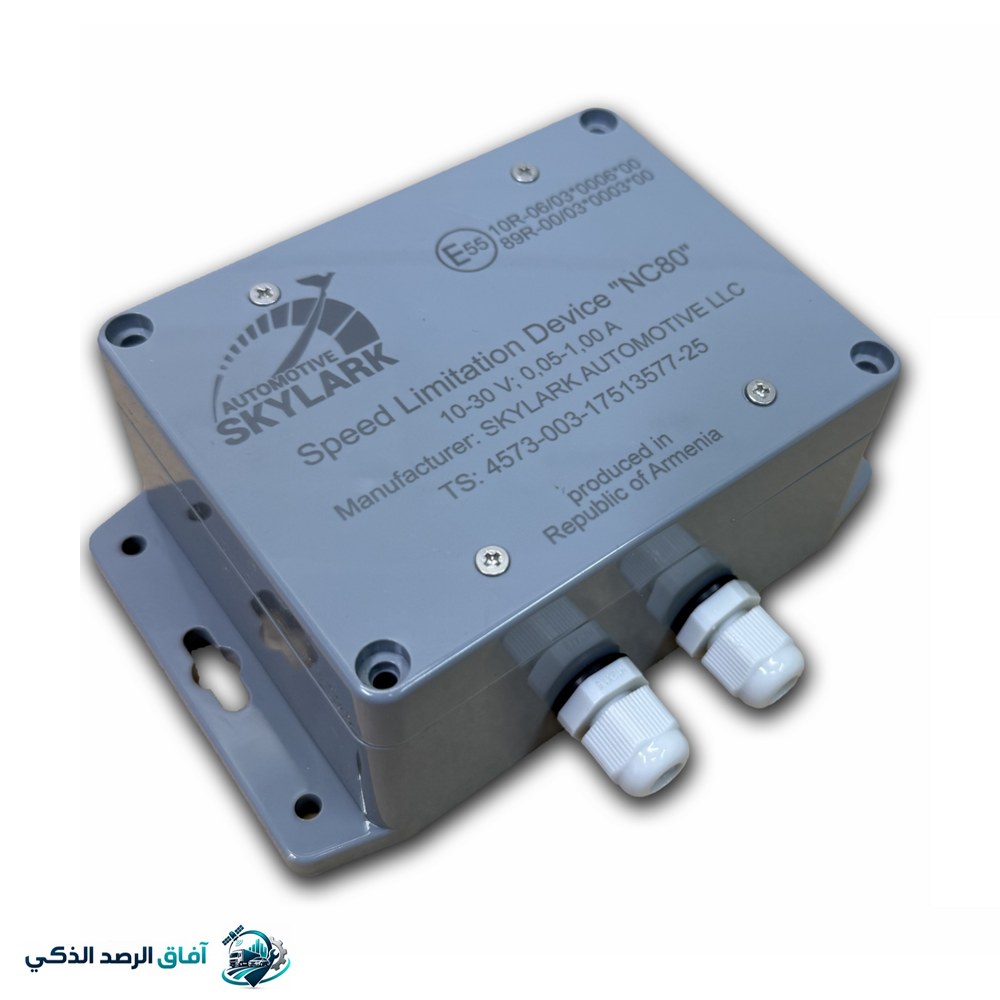
Speed limiters are used in trucks, buses, company cars and rental vehicles, and in any fleet that wants its speed limit to be an enforced rule rather than an instruction.
Speed Limiter vs Cruise Control
The two are often confused because both deal with speed, but they do different jobs:
- Cruise control: holds a steady speed chosen by the driver without pressing the pedal. It is a comfort feature for long roads.
- Speed limiter: stops the vehicle from exceeding a maximum speed, while the driver is free below it. It is a safety and discipline tool.
- Who controls it: the driver turns cruise control on and off at will; a fleet speed limiter is set by management and cannot be overridden by the driver.
The NC80 can also disable the vehicle’s cruise control if the company wants it to.
How Does the NC80 Speed Limiter Work?
The NC80 works on one principle: reducing the fuel supplied to the engine once the vehicle reaches its maximum speed, which is the principle required by the UN regulations for speed limitation devices. The device never uses the brakes, so there is no sudden slowdown to surprise the driver or the vehicles behind.
- Reading speed: the device determines vehicle speed, with or without a speed sensor or CAN line in the vehicle.
- Comparing: it compares current speed with the limit set for the driver, the road or the vehicle’s condition.
- Acting: at the limit it controls the electronic accelerator pedal, a fuel valve or the throttle, so the vehicle stops accelerating and holds the set speed.
The device has passed type approval and holds E-mark certificates; the label on the unit refers to UN Regulation R10 for electromagnetic compatibility and R89 for speed limitation devices.
A Speed Limiter for Almost Any Vehicle
The NC80 is universal: one device fits virtually any wheeled vehicle, from a family car to heavy trucks and buses. The installation depends on the pedal and fuel type:
- Vehicles with an electronic accelerator pedal: the device alone is enough, with no extra accessories.
- Diesel vehicles without an electronic pedal: a fuel valve is added; it works on command from the device and restricts fuel to the high-pressure pump.
- Petrol vehicles with a carburetor: a cable stepper motor is added to close the throttle at the set speed.
If your vehicle has a CAN line, read what CAN bus is in cars and trucks to see what data can be read from it.
Smart Limits by Driver, Load and Road
A traditional limiter uses one number for every situation. The NC80 changes the limit to suit the situation:
- By driver: when several drivers share a vehicle, a lower limit, such as 80 km/h, can apply to new drivers for as long as they drive.
- By load: the device lowers the maximum speed when the vehicle is overloaded, down to 0 km/h if the overload is critical. See also the truck axle load sensor.
- By road: its built-in accelerometer detects rough roads, lowers speed to a safe level and keeps it there until the vehicle is back on a smooth surface.
Connecting the Speed Limiter to GPS Trackers and ADAS Cameras
The NC80 can act as an executive device that takes commands from other equipment in the vehicle, such as a GPS tracker, driver and road monitoring cameras (DSM and ADAS) or body position sensors, and then physically limits speed according to the programmed scenario. For example:
- Speed zones: the tracker sends a command to lower the limit when the vehicle enters a city or work site, and raises it on the way out.
- Driver fatigue: when the camera detects drowsiness or distraction, the maximum speed can be lowered until the driver stops to rest.
- Body position: on tipper trucks, high-speed driving can be blocked while the body is raised.
Integrated with such devices, it becomes, according to the manufacturer, a level-3 Intelligent Speed Assistance (ISA) system, the level that actually intervenes in speed rather than only warning. Learn about AI dash cams for trucks.
Safety Features That Work Without a Tracker
The device can also work on its own and set the maximum speed according to the vehicle’s condition. For example, it limits speed to 0 km/h and disables the accelerator pedal when:
- The engine oil level drops below the critical value, protecting the engine from damage.
- The driver or a passenger has not fastened their seat belt.
NC80 Technical Specifications
- Power: from the vehicle’s 12 V or 24 V supply, with no internal battery.
- Built-in accelerometer: to detect rough roads.
- Inputs: up to 4 digital inputs for commands from external devices.
- Connectivity: RS232 port and a CAN bus adapter.
- Controls: electronic accelerator pedal, fuel valve and throttle, plus the option to disable cruise control.
- Approval: E-mark certificates after type approval.
NC80 Components and Kits
- NC80 unit: the main device, enough on its own for vehicles with an electronic pedal.
- USB configuration adapter: connects the device to a computer to set speeds and parameters; one adapter per workshop technician is recommended.
- 12 V or 24 V fuel valve: for diesel vehicles without an electronic pedal, with a brass valve and an electromagnetic coil, a 4 mm main channel and a manually adjusted 1 mm auxiliary channel; the voltage is specified when ordering.
- Cable motor: a stepper motor with cable rods and special brackets for carburetor petrol vehicles.
Ready-made kits are available: the NC80 set (device plus USB adapter), the NC80+ for diesel vehicles up to EURO 3 (device plus fuel valve), and the NC80 SET (device, valve and USB adapter), which is the most convenient choice for a first trial installation.
Speed Limiter Installation Steps
- Survey: we review the vehicle type, pedal, fuel and installed tracker.
- Kit selection: the device alone, with a fuel valve, or with a cable motor.
- Installation: the device is mounted and wired to vehicle power and to the pedal, valve or throttle.
- Configuration: we set the maximum speeds and scenarios through the USB adapter.
- Integration and testing: we connect the device to the tracker or camera if needed and road-test the vehicle before handover.
Before installation, check the dealer’s warranty terms and any regulatory requirements that apply to your vehicle in Saudi Arabia.
Speed Limiter or Speed Alerts?
Speed alerts in a tracking system tell you after a driver has exceeded the limit and are useful for reports and training; a speed limiter prevents the overspeed in the first place. The best approach combines both: the limiter as a safety ceiling and alerts as a daily monitoring tool. Read more about truck speed limits in Saudi Arabia and how to control them in your fleet and about a safe driving policy for companies.
In oil, gas and contracting projects that require an IVMS system, a speed limiter complements driver behavior monitoring.
Frequently Asked Questions
Does a speed limiter use the brakes?
No. The NC80 works only by reducing the fuel supplied to the engine and never uses any braking system, so the vehicle slows smoothly.
What is the difference between a speed limiter and cruise control?
Cruise control holds a steady speed chosen by the driver; a speed limiter prevents exceeding a maximum speed set by management, while the driver is free below it.
Is a speed limiter suitable for older trucks?
Yes. Diesel vehicles without an electronic pedal get a fuel valve, carburetor petrol vehicles get a cable motor, and the device works with or without a CAN line.
Can the maximum speed be changed after installation?
Yes. Settings are changed through the USB adapter and a computer, and the limit can also change automatically on commands from the GPS tracker according to the programmed scenario.
Will the speed limiter work with the tracker already in my vehicle?
The NC80 takes commands through its digital inputs and RS232 port, so it can connect to many trackers that have digital outputs. The Afaq team checks your device before installation.
How Can Afaq Alrasd Help?
Afaq Alrasd supplies the NC80 speed limiter and its accessories, installs and configures it to match your company’s speed policy, and connects it to your tracking system and fleet cameras when needed. Request a quote and our team will contact you about your vehicle types and the speeds you want to set.
Read also: the smart truck cargo door lock and how it connects to tracking.