Plan smarter routes for your fleet and save time and costs
Smart route optimization helps you organise vehicle trips and deliveries, improve the order of stops and distribute tasks more efficiently around your operational needs.
What is smart route optimization?
Route optimization means working out a practical order for delivery points or operational visits based on the information available, rather than relying on manual sequencing alone.
Planning can take into account factors such as:
- Locations and destinations.
- The number and priority of tasks.
- Working hours and delivery time windows.
- Vehicle capacity and assignment constraints.
- Traffic information, where available.
- Operational requirements set by your business.
The result is better-organised routes, less unnecessary travel, better use of time and a clearer distribution of work across vehicles and teams.
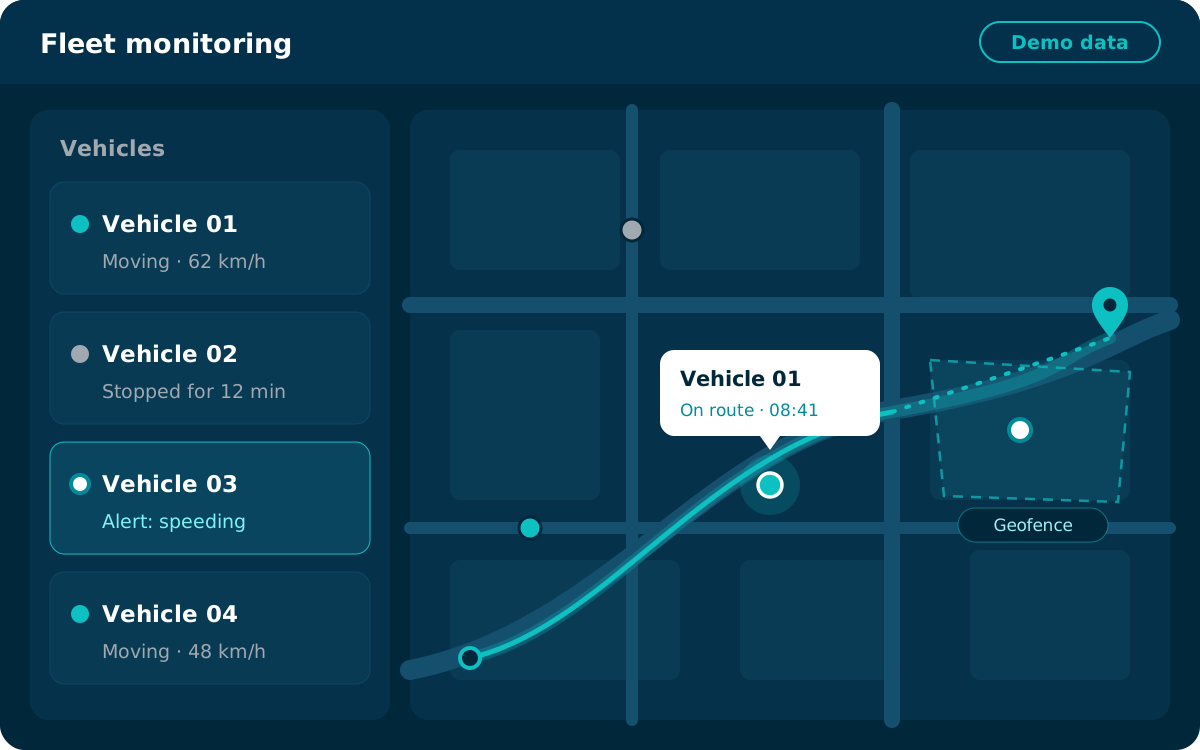
Supported factors vary by platform and configuration. The interface shown is illustrative and does not display real data.
The challenges of traditional route planning
When planning relies on spreadsheets and individual experience alone, the same issues tend to come up day after day.
Manual planning
Organising a large number of orders and stops efficiently is difficult.
Late arrivals
An unclear task order and uncertain arrival times can disrupt the operating schedule.
Higher operating costs
Unorganised trips can increase the distance travelled and fuel consumption.
Unbalanced workloads
Poorly distributed orders can overload some vehicles and delay tasks.
How smart route optimization works
Clear steps, from your operational data to following up on execution.
Add tasks and destinations
Enter orders, stops, working hours and the operational constraints available.
Analyse the requirements
Review locations, priorities, available capacity and the factors that affect each trip.
Generate suggested routes
Sequence visits and distribute tasks according to the data and constraints the system supports.
Follow up on execution
Monitor routes and adjust them during operations, depending on platform capabilities and available data.
Using live traffic data and re-planning during operations depends on the platform used, its configuration and data availability.
Features that help you organise routes
Capabilities that help your operations team organise daily trips; details vary by platform and configuration.
Optimised stop sequence
Suggests a practical order for destinations based on the requirements entered.
Multi-task organisation
Arranges multiple orders and visits into a clear operating plan.
Estimated arrival times
Shows expected arrival times where the system supports this feature.
Task distribution
Helps allocate work across vehicles according to available capacity and constraints.
Route execution follow-up
Compares vehicle movement with the planned route where the platform supports it.
Updating operating plans
Adjusts routes or tasks when operating conditions change, within the system’s capabilities.
How route optimization helps improve your operations
Practical benefits in day-to-day work; results depend on how you operate and on the quality of your data.
Fewer unnecessary trips
Cut unnecessary trips when task distribution allows.
Less distance and fuel
Helps limit the distance travelled and fuel consumption.
Better-organised driver time
Improves how driver time and visits are scheduled.
More reliable delivery times
Supports keeping to agreed delivery times.
Balanced workloads
A more even distribution of tasks across vehicles.
Clearer daily operations
Gives your team clearer day-to-day visibility.
Who benefits from route optimization?
A good fit for organisations that run recurring trips or many stops, with the solution configured around each operation.
Delivery & e-commerce companies
Sequence large numbers of daily drop-offs across the city and assign them to vehicles and drivers.
Transport & logistics companies
Organise intercity trips and loading and unloading points around operating schedules.
Product distribution companies
Plan distribution rounds to outlets and customers in a practical order.
Maintenance & field service teams
Order field visits by location, priority and working hours.
Food & consumer goods distribution
Organise recurring distribution rounds around customers’ receiving times.
Businesses with many site visits
Organise team and representative visits to different sites during the day.
From route plan to execution
When route planning works alongside vehicle tracking, you can follow how the plan is carried out on the road and improve it over time.
- Follow vehicle locations via GPS.
- Review the planned route and compare it with execution, where available.
- Use estimated arrival times, where supported.
- Follow alerts and route deviations when these functions are enabled.
- Review operational performance to identify improvements.
Please note: route planning and vehicle tracking are related but distinct capabilities. Monitoring and alerts depend on the tracking platform, device capabilities, configuration and data availability.

Why choose Afaq for route optimization?
An approach that starts with your operational needs and connects planning with tracking and support.
Your needs first
We understand how you operate before choosing a solution.
The right devices and platforms
Chosen to suit the nature of your fleet.
Planning linked to tracking
Route planning connected to vehicle tracking where systems are compatible.
Reports and alerts
Help setting up the reports and alerts available.
Technical support
Support within the agreed scope of service.
Smart route optimization FAQs
Short answers to common questions about route optimization.
What is smart route optimization?
It means using a system to work out a suitable order for delivery points or visits and to distribute them across vehicles, based on data such as locations, priorities, working hours and vehicle capacity, instead of relying on manual sequencing alone.
How does route optimization help organise deliveries?
It helps arrange drop-offs in a practical sequence, allocate orders to the available vehicles and cut unnecessary travel, so the daily delivery schedule is clearer and easier to follow.
Can tasks be distributed across more than one vehicle?
Yes. Many route optimization systems can distribute tasks across several vehicles according to capacity and the constraints you define. This depends on the platform used and how it is configured.
Can delivery time windows and vehicle capacity be taken into account?
Yes, in systems that support time windows and vehicle capacity, provided this data is entered correctly. We review the available capabilities with you before implementation.
Does route optimization integrate with GPS tracking?
Route planning can be connected to GPS vehicle tracking where the systems are compatible, so planned routes can be compared with actual execution. They are separate capabilities, and the connection depends on the platform, devices and configuration.
Can routes be updated during operations?
Some platforms allow routes or tasks to be adjusted when operating conditions change, either manually or with system assistance. How far this goes depends on the platform’s capabilities and the data available.
Is route optimization suitable for maintenance and field service teams?
Yes. It can be used to order field visits by location, priority and working hours, configured around how your teams work.
Ready to organise your fleet’s routes more smartly?
Explore the options that fit your vehicles, your orders and your operational needs.