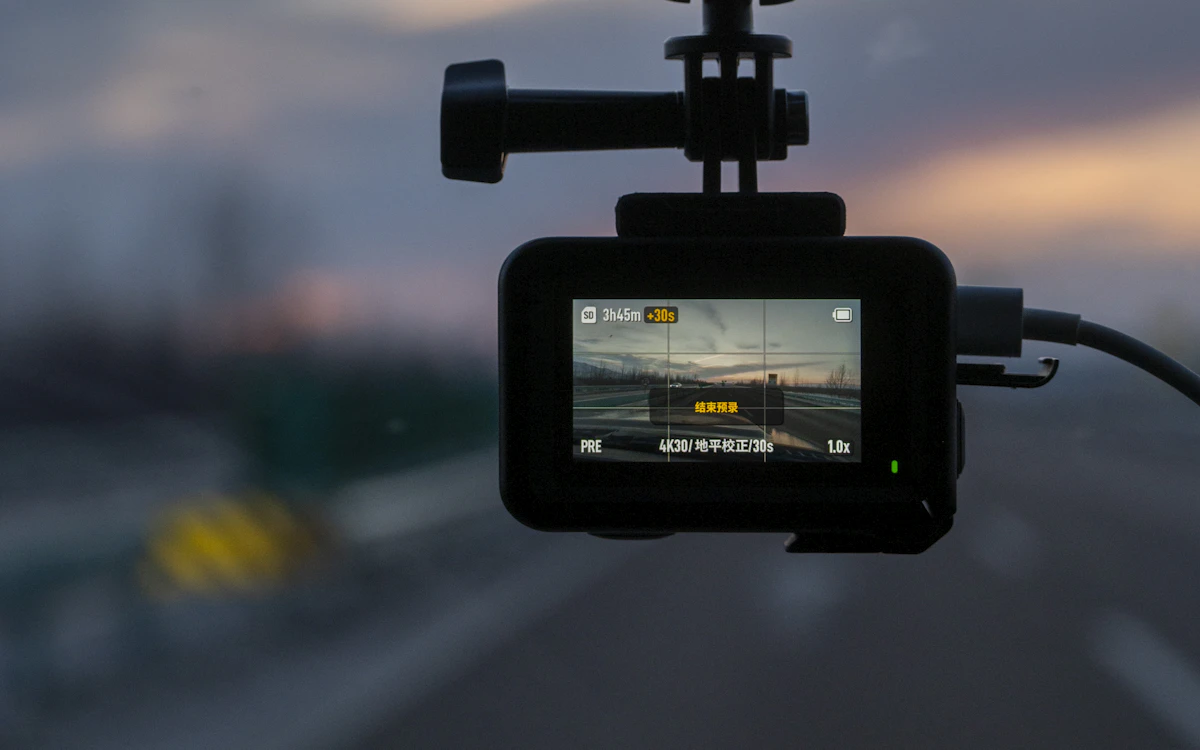
Many companies start with an ordinary dash cam in each vehicle, then discover it is not enough for fleet management: recordings sit on a memory card inside the vehicle, and nobody knows about an incident until days later. Modern fleet camera systems link video to location and trip data, and an AI dash cam for trucks adds alerts for risky situations while driving. This guide explains the components, what AI features really do and do not do, and how to choose the right setup for your fleet in Saudi Arabia.
محتويات المقال
Ordinary Dash Cam vs Fleet Camera System
A personal dash cam records the road to a memory card for manual review when needed. A fleet video system is built to manage many vehicles from one place and may include:
- Tracker integration: review a clip with the vehicle’s location, speed and time of the event, when the device and platform support it.
- Multiple cameras: road-facing and driver-facing, plus cabin, side and rear cameras on trucks and buses, depending on the recorder.
- Remote access: review clips or watch live through the platform when connectivity and a suitable data plan are available.
- User permissions: control who can view, export or share recordings.
Components of a Fleet Camera System
- Front road camera: records the scene ahead, is the basis for reviewing incidents and feeds the road alerts of an AI dash cam for trucks.
- Driver camera: faces the driver and is used for reviewing driving behavior or running the driver monitoring features of an AI dash cam.
- Cabin, side and rear cameras: useful on buses and large trucks to cover blind spots and the loading area.
- MDVR: a mobile digital video recorder that supports several cameras and stores the footage; channels, storage and connectivity vary by model.
- Tracker and platform: provide location and trip data and show video alongside it when integration is supported.
For how these parts work together with an AI dash cam, see our video telematics solution.
What Makes an AI Dash Cam for Trucks: ADAS and DMS
An “AI dash cam” analyzes the image on the device or in the platform to detect specific situations and send an alert. The two best-known feature sets are:
- ADAS (advanced driver-assistance systems): use the road camera, for example to warn when the truck gets too close to the vehicle ahead or leaves its lane without signaling.
- DMS (driver monitoring system): uses a driver-facing camera, for example to warn of signs of drowsiness, distraction or phone use while driving.
These features are not available on every camera, and their accuracy depends on the device, mounting angle, lighting and settings. Recording alone does not mean automatic detection; a standard camera only stores footage for later review. Ask the supplier which features the proposed AI dash cam model supports, and pilot it on a few trucks before rolling it out.
How Companies Benefit
- Incident and complaint review: understand what happened from the clip, location and time instead of relying on accounts alone.
- Driver coaching: use real clips in training and link them to driver behavior monitoring data such as speeding and harsh braking.
- Safer long trips: drowsiness and distraction alerts from an AI dash cam help on intercity and night routes.
- Loading and delivery checks: cameras covering the cargo area help review deliveries.
- Buses and school transport: interior and exterior cameras help review boarding and drop-off, alongside school bus tracking.
Does the Camera Record When the Truck Is Parked?
It depends on the power connection and settings. Some devices offer a parking mode that records on motion or impact, but running with the engine off drains the battery, so this is usually limited by time or by low-voltage protection. Ask about it specifically if your trucks park for long periods at unsecured sites.
Storage, Connectivity and Data Use
- Local storage: footage is saved on a card or drive in the recorder; how long it lasts depends on capacity, video quality, number of cameras and operating hours.
- Event clips: some systems upload a short clip when an event happens rather than the full recording, to save data.
- Live viewing: needs good connectivity and a suitable data plan, and uses far more data than tracking alone.
Before signing, ask for an estimate of data use based on how you plan to use the AI dash cam system, because it directly affects running costs.
Privacy and Responsible Use
Driver and cabin recordings are sensitive data and should be handled in line with Saudi Arabia’s Personal Data Protection Law and your company policies. Good practices include:
- A clear, written purpose for recording, shared with drivers.
- Access limited to authorized users.
- A defined retention period, with deletion of footage no longer needed.
- Documented procedures for sharing clips with third parties.
These are general practices, not legal advice. For more, read Are Dash Cams Legal in Saudi Arabia?
Questions to Ask Before Buying
- How many cameras does the recorder support, and what is the storage capacity?
- Are ADAS and DMS available on this exact AI dash cam model, and how are alerts configured?
- Is video linked to vehicle location and trip data on the same platform?
- Is live viewing and remote clip retrieval available, and how much data does it use?
- Do the devices comply with the requirements of the Communications, Space and Technology Commission (CST)?
- Who installs the devices, and what warranty and support follow installation?
Frequently Asked Questions
Is an ordinary dash cam enough for a company?
It records the road in one vehicle, but it usually lacks location linking, remote review, multi-vehicle management and user permissions on one platform.
Does an AI dash cam detect driver fatigue automatically?
Only if the driver camera supports driver monitoring (DMS) and is configured correctly. A standard camera records footage for review and does not detect fatigue.
Can I watch truck cameras live on my phone?
Yes, when the device and platform support live viewing and the vehicle has suitable connectivity; continuous use depends on the data plan.
How long are recordings kept?
It depends on storage capacity, video quality, number of cameras and operating hours, as well as the retention policy your company sets.
Can cameras be added to my existing tracking system?
It depends on whether the tracker and platform are compatible with the video device, so the current setup is checked first.
How Afaq Alrasd Aldhki Can Help
We help companies in Saudi Arabia choose the right AI dash cam for trucks and other vehicles, check compatibility, and link video to GPS data on Afaq Platform, with installation and technical support. Explore our fleet dashcams, read our Howen dashcam review, or request a quote.