Traditional truck door locks rely on keys that get lost or copied, and they never tell the company when or where a door was opened. In refrigerated trucks, a frozen lock can even delay delivery. That is where an electronic truck cargo door lock comes in: a motorized lock fitted inside the cargo box and locked or unlocked remotely from your tracking system. This guide explains how it works, why it suits reefer trucks, and what to check before choosing one, using the FleteLock lock that Afaq Alrasd supplies as an example.
Table of Contents
Why Traditional Locks Fall Short
Transport companies run into the same problems with ordinary locks on almost every trip:
- Keys: they get lost, stolen or copied, and there is no way to know who holds a copy.
- Doors opened without the company knowing: a mechanical lock sends no alert, so management cannot tell whether the cargo was opened on the road.
- Freezing in reefer trucks: cold and humidity form ice inside the lock, which jams it and delays unloading.
- Cargo substitution or contamination: an unauthorized opening can mean stolen or tampered goods, and for food and medicine a broken cold chain.
What Is an Electronic Truck Cargo Door Lock?
It is an electromechanical lock driven by an electric motor and mounted on the door inside the cargo compartment, so it cannot be seen or reached from outside. It needs no key: it locks and unlocks on an electronic command and reports its status (locked or unlocked) to the tracking device.
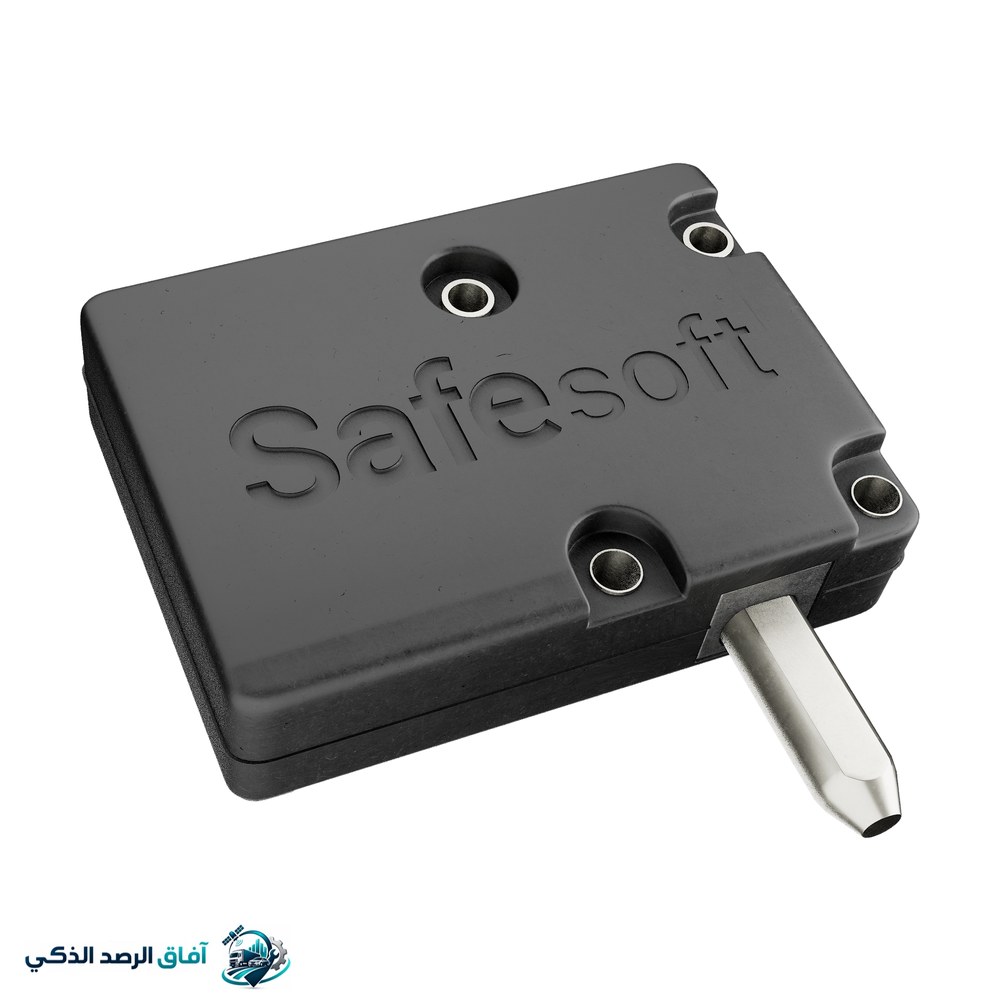
This type of lock is used on box trucks, enclosed trailers, vans, refrigerated trucks and containers, for both dry and chilled cargo.
Electronic or Mechanical Lock?
The difference is not only about steel strength; it is about information and control:
- Opening: a mechanical lock opens with a key the driver carries; an electronic lock opens on a command from management or a method you choose.
- Visibility: a mechanical lock tells you nothing; an electronic lock reports the door status to the tracking platform with time and location.
- Mounting: an external lock can be cut or broken; an internal electronic lock is out of reach.
- Cold: a mechanical lock can freeze; an electronic lock with icebreaking overcomes it.
- Driver changes: with an electronic lock there are no keys to hand over or collect.
How Does the Lock Work With a GPS Tracker?
The idea is that the tracker in the truck becomes the lock’s controller. With the FleteLock lock it works like this:
- Command: the tracking platform or control room sends a lock or unlock command to the tracker in the truck.
- Action: the lock motor drives the bolt to lock or unlock the door.
- Confirmation: the lock sends a LOCKED or UNLOCKED signal back to the tracker, so the status shows on the platform with time and location.
Besides the tracker, the lock can be controlled by an RF remote, a proximity card reader for the driver, a BLE controller or a keypad. With several digital inputs and outputs, it integrates easily with tracking systems that support digital outputs. New to tracking? Read how a GPS tracker works.
A Smart Lock for Reefer Trucks: Icebreaking
Freezing is the biggest problem for locks on refrigerated trucks. The FleteLock lock has an icebreaker function and an automatic anti-stuck feature, and it works reliably in severe cold and high humidity.
- Bolt force: up to 300 N in icebreaking mode.
- Operating temperature: -30 to +85 °C according to the official datasheet.
- Protected electronics: the circuit board is fully sealed in silicone resin against moisture.
- High-torque motors: for smooth operation and a long service life.
The lock complements temperature monitoring: the sensor watches the cargo temperature, and the lock makes sure the door opens only at the right place and time. Learn more about the reefer temperature sensor and why reefer truck temperatures rise.
One-Time Passwords for Higher Security
For high-value cargo, a model with one-time password (OTP) calculation is available. A new code is generated for every opening and cannot be reused, adding another layer on top of remote control.
Cargo Door Sensor: A Simple, Useful Add-On
If a truck does not need a full lock, or you want an extra layer alongside it, a door sensor sends an instant alert to the driver or control room whenever the cargo door opens. The FleteLock magnetic sensor kit (SM-1326):
- Consists of a magnetic reed sensor and a magnet mounted on the door.
- Detects closing when the gap is under about 55 mm, and opening when it exceeds about 60 mm.
- Is rated IP67 and works from -40 to 130 °C.
What to Check Before Choosing a Truck Door Lock
- Supply voltage: the FleteLock lock runs on 10.5 to 32 VDC, so it suits 12 V and 24 V vehicles, with reverse-polarity protection.
- Operating temperature: critical for reefers and for Saudi summers.
- Control method: tracking platform only, or also a remote or driver card?
- Tracker integration: make sure the tracker has a digital output to send the command and an input to read the lock status.
- Mounting: an internal lock is far harder to tamper with than an external one.
- Track record: according to the company, FleteLock locks are used in more than 300,000 vehicles worldwide.
Installing the Lock and Connecting It to Tracking
- Survey: we review the truck type, the door and the installed tracker.
- Installation: the lock is mounted on the door inside the cargo box and wired to vehicle power.
- Connection: the lock is wired to a tracker output for commands and an input for its status.
- Setup: lock/unlock commands and door-status alerts are added on the tracking platform.
- Testing: we lock and unlock from the platform and confirm the correct status arrives before handover.
Who Is an Electronic Cargo Lock For?
- Food companies: to protect chilled and frozen loads from unauthorized opening.
- Pharmaceutical companies: where the cold chain must not break. Read about cold chain monitoring.
- Delivery and last-mile fleets: with many stops and doors that should open only at the delivery point.
- High-value goods: such as electronics, where theft from the cargo box is a real risk.
- Containers and trailers: on long intercity trips.
FleteLock also offers a turnkey solution for TAPA TSR transport security compliance, covering locks, sensors and integration with tracking systems.
Frequently Asked Questions
Does an electronic truck door lock freeze in reefer trucks?
The FleteLock lock has an icebreaker function and an anti-stuck feature, and it operates down to -30 °C according to its datasheet.
Will the lock work with the tracker already in my truck?
The lock connects to trackers through digital inputs and outputs. The tracker needs one output to send the lock command and one input to read the status, and the Afaq team checks your device before installation.
Does the lock need a key?
No. It locks and unlocks on an electronic command from the tracking system, a remote or a driver card, so there are no keys to lose or copy.
Where is the lock installed?
On the door, inside the cargo compartment, so it cannot be reached from outside.
What is the difference between a lock and a door sensor?
A sensor tells you the door was opened; a lock prevents it from opening unless you allow it, and reports its status. The two can work together.
How Can Afaq Alrasd Help?
Afaq Alrasd supplies the FleteLock lock and cargo door sensor, installs them and connects them to your fleet’s tracking system, so you can see every truck’s door status in real time and control opening from the platform. Request a quote and our team will contact you about your trucks and the tracker installed in them.
Read also: truck speed limits in Saudi Arabia and how to control them in your fleet.