On construction and heavy transport projects, equipment and trucks are spread across many sites, and it is often hard to know where each machine is, how many hours it actually worked and whether it moved outside working hours. Construction equipment tracking turns these questions into data you can review from one platform. This guide explains what can be tracked, how to choose the right device for each type of equipment, how equipment utilization tracking supports better decisions and what to ask before signing a contract in Saudi Arabia.
محتويات المقال
Why Heavy Equipment Differs From Ordinary Vehicles
- Off-road work: much equipment works inside project sites and never travels on public roads, so operating hours matter more than kilometers.
- Different power sources: some machines have a battery and an engine, while trailers and unpowered assets need a battery-powered tracker.
- Moving between projects: one machine may move between several sites in a month, and rented machines need closer monitoring.
- Operating conditions: heat, dust and vibration affect the choice of device and how it is installed.
What Construction Equipment Tracking Gives You
- Location and movement history: the last available location of each machine and a record of its moves between sites.
- Operating hours: how long the engine or machine ran, where the device and wiring support it. This is the basis for scheduling maintenance and calculating usage.
- Fuel data: fuel level or consumption via CAN bus or a tank sensor, depending on the machine. See vehicle data via CAN bus.
- Geofences: a boundary for each project site, with an alert when a machine leaves it or moves outside working hours.
- Truck driving behavior: speeding and harsh braking in haulage trucks. See driver behavior monitoring.
How to Choose the Right Device for Each Machine
In construction equipment tracking, no single device suits every machine. The general rule:
- Excavators, bulldozers, loaders and cranes: a tracker wired to the machine’s power, reading operating hours, and fuel where needed.
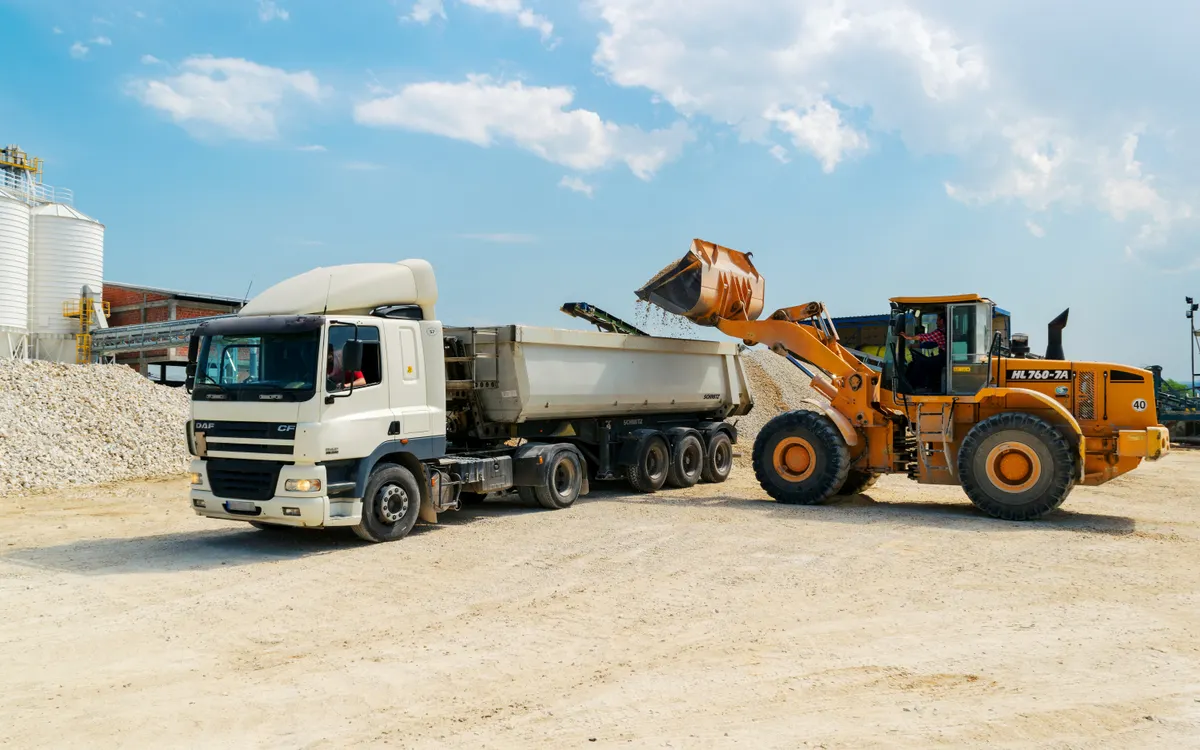
- Trucks and dump trucks: a vehicle tracker with CAN bus data where available, with optional cameras or fuel sensors.
- Generators and fixed equipment: location, operating hours, and fuel with suitable sensors.
- Trailers and unpowered assets: a battery-powered asset tracker. It reports location at longer intervals to save battery, so it does not suit anyone who needs continuous live tracking.
For details, see heavy equipment tracking and asset tracking.
Operating Hours and Preventive Maintenance
Heavy equipment maintenance is usually scheduled by operating hours, not distance. When hours are recorded automatically through construction equipment tracking, you can set an alert before each oil change, filter change or routine inspection instead of relying on manual logs. This data can also feed the maintenance plans in our fleet management and maintenance system.
Protection From Unauthorized Use and Theft
- An alert when a machine starts or moves outside working hours.
- An alert when it leaves the project site boundary.
- An alert on a sudden drop in fuel level while stopped, if a fuel sensor is fitted. Read more in our guide on how to monitor fuel consumption.
The alerts available in construction equipment tracking depend on the device, installation and settings, so agree with the supplier which alerts matter to you before choosing the device.
Trucks and Transport Companies
In heavy transport, truck tracking combines trip, fuel and driver behavior monitoring, and sometimes temperature or door sensors depending on the cargo. Some activities regulated by the Transport General Authority (TGA) also have specific vehicle tracking requirements, so check the current requirements on the authority’s official website and ask the supplier clearly whether its solution fits your activity. See our truck tracking system guide and our logistics fleet solutions.
Equipment Utilization Tracking: How Much Do Your Machines Really Work?
One of the main benefits of construction equipment tracking is knowing the utilization rate: the gap between the hours a machine was available and the hours it actually worked. Equipment utilization tracking shows this rate for each machine and each project, and decisions become clearer:
- Move machines that stand idle for long periods to a project that needs them instead of renting new ones.
- Spot machines working long hours that need earlier maintenance.
- Compare owning a machine with renting it, based on actual use.
- Allocate operating costs to projects according to recorded hours.
Rented and Hired-Out Equipment
If your company rents out equipment or hires machines from others, the hours recorded by equipment utilization tracking support more accurate billing and a faster review of any dispute over working hours or operating days. Knowing where a rented machine is also confirms that it is working on the agreed project.
Construction Equipment Tracking by Machine Type
Not every machine needs the same setup; the type of work and the power source decide what you track:
- Excavators, wheel loaders and backhoes: actual operating hours, location within the project and out-of-hours running.
- Cranes: working hours and moves between sites, with extra sensors depending on the available equipment.
- Concrete mixer trucks: trips between the batching plant and the project, and waiting time on site.
- Trailers and engineless equipment: battery-powered devices to know the location and catch any unexpected movement.
- Generators: operating hours and fuel at fixed sites, which is why we wrote a dedicated guide on the generator tracking system.
Installation Challenges on Heavy Equipment
- Vibration, dust and heat: choose devices and wiring that withstand site conditions, with suitable water and dust protection.
- Power source: many machines use electrical systems different from cars, so device compatibility must be checked.
- Mounting position: a protected and preferably hidden spot, away from high heat sources.
- Reading operating hours: hours may come from the ignition signal or from engine data depending on the machine, and each method has its own accuracy.
That is why successful construction equipment tracking starts with a technical survey of each machine type before installation.
Questions to Ask Before Choosing Construction Equipment Tracking
- Can operating hours and fuel be read on our specific machines?
- Which device do you propose for trailers and unpowered assets, and what are its battery life and update frequency?
- Are the devices suited to the heat and dust at our sites, and how are they installed to reduce tampering?
- What happens to the data at sites with weak coverage?
- Are equipment utilization tracking reports available per project, and can they be linked to an ERP system?
- Who installs the devices on project sites, and what technical support is available?
If you are comparing systems in general, also read vehicle tracking vs fleet management.
Frequently Asked Questions
Can equipment that never uses public roads be tracked?
Yes. Construction equipment tracking uses GPS inside project sites just as on roads, and you can set a geofence for each site. What matters is choosing a device suited to the power source and operating conditions.
How are a machine’s operating hours calculated?
Usually from the engine ignition signal, or from the machine’s CAN bus data where available. Reading accuracy depends on the machine and the wiring method.
Can trailers and generators without power be tracked?
Yes, with battery-powered asset trackers. They report location at longer intervals than wired devices, and battery life depends on the update frequency.
Can equipment data be linked to an ERP system?
It can, depending on the system used and the project scope, to follow usage, maintenance and costs per project. See our Odoo ERP services and Odoo for construction companies.
Does tracking work at remote sites with no coverage?
Many devices store readings in memory while the network is down and send them when coverage returns, so operating hours and movement history are not lost. This depends on the device model and its settings.
How Afaq Alrasd Aldhki Can Help
We support construction equipment tracking and truck tracking from the first assessment of your machines and trucks, through choosing the right trackers and sensors for each type, to following locations, operating hours and fuel on Afaq Platform, with installation and technical support. Request a quote or contact us to start with an assessment of your equipment.