Monitor your vehicles and know what’s happening on the road
GPS road monitoring helps you follow vehicle locations and routes, review trips and alerts, and get a clearer picture of how your fleet moves through a single monitoring platform.

What is smart GPS road monitoring?
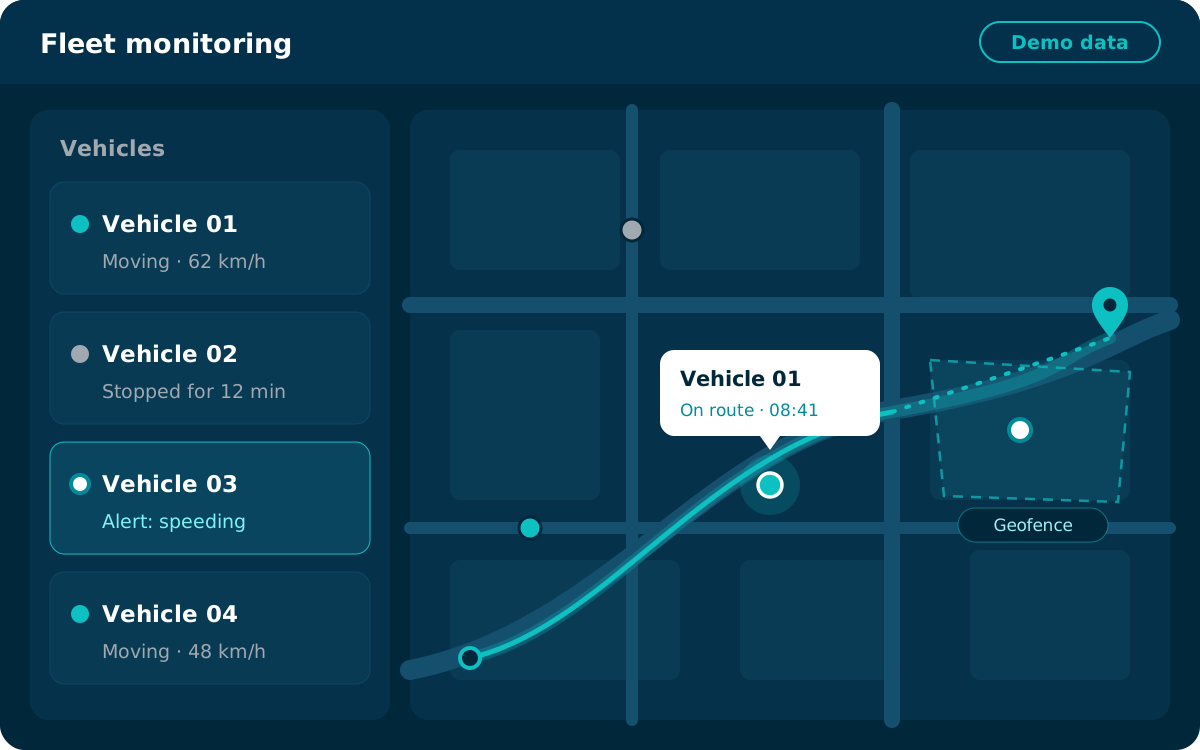
GPS road monitoring lets authorised users follow vehicle positions and movement and review trip history and available alerts through a single tracking platform.
In practice, it helps you:
- Follow vehicle locations.
- Review past trips.
- Understand how your fleet moves during the day.
- Access the alerts and data available.
The data available, and how often locations update, depend on the installed tracking device, network connectivity, the platform and its configuration.
The interface shown is illustrative and does not display real data.
The challenges of running a fleet without clear visibility
When vehicle information is scattered or not available when it is needed, daily monitoring becomes harder.
Hard to know where vehicles are
Tracking vehicles manually takes extra time and effort when information is spread across several sources.
Limited trip visibility
Reviewing a vehicle’s movements and past route is difficult without an organised trip record.
Late detection of some events
Responses can be delayed when suitable alerts are not in place or are not reviewed regularly.
Information is hard to bring together
Operations teams need a single view to review vehicles, trips and the data available.
How GPS road monitoring works
Four steps, from installing the device to reviewing data on the platform.
Install the tracking device
A device suited to the vehicle and your operational needs is selected and installed.
Location data is transmitted
The device sends location information according to its capabilities and network availability.
Vehicles appear on the platform
Available data is shown in a monitoring interface where users can review vehicles and their movement.
Review trips and alerts
Users can review the records and alerts supported by the platform and its configuration.
The data sent, and how often, varies by tracking device, network coverage and platform settings; weak connectivity can affect when data arrives.
Features that help you monitor your fleet
Capabilities that support daily monitoring; each depends on device support, the platform and configuration.
Location tracking
Review vehicle locations based on the data sent by the tracking device.
Trip history
Look back at past trips when their records are available on the platform.
Route monitoring
Review a vehicle’s movement against a planned route when this feature is available and configured.
Alerts
Use the alerts supported by the device and platform, such as certain movement events or leaving a geographic zone.
Geofences
Define geographic zones and review entry and exit events where supported.
Operational reports
Review the location, trip and event reports available under your system settings.
How road monitoring helps improve your operations
Practical benefits in daily monitoring; results vary with how you operate and the data available.
Clearer vehicle visibility
Better visibility of where vehicles are and how they move.
Easier trip reviews
Past trips are easier to review when needed.
Better coordination with drivers
Supports coordination between the operations team and drivers.
Reviewing deviations and events
Helps review recorded deviations and events.
Information for decisions
Provides information that supports operational decisions.
More organised daily monitoring
Supports better day-to-day monitoring routines.
Who benefits from GPS road monitoring?
Suited to organisations that need to follow how their vehicles move, with the setup varying by activity.
Transport & logistics companies
Follow trucks and intercity trips, and review stop and arrival times.
Delivery & distribution companies
Clearer visibility of delivery vehicles across the city and of distribution rounds.
Corporate & operational fleets
Organise how company vehicles are used and review their movement against your operating policies.
Field service teams
Follow field team locations and review the visits completed during the day.
Contracting companies
Follow vehicles and mobile equipment as they move between projects and sites.
Organisations managing vehicle movement
An organised record of vehicle movement for internal review and planning.
From location to operational data
GPS provides a vehicle’s position and movement; other operational data needs additional compatible devices or integrations.
- GPS/GNSS location and movement.
- Trip records, where supported.
- Geofence events, where configured.
- Fuel readings via a compatible CAN Bus integration or fuel sensor.
- Vehicle parameters via CAN Bus, where supported.
- Temperature and door sensors and vehicle cameras, where suitable devices and integrations are available.
Please note: GPS location alone does not provide all vehicle telemetry. Other readings may require compatible devices, adapters, sensors and platform configuration, and what is available varies by vehicle and device.
Solutions that can integrate with your fleet’s needs
Related capabilities that can be added according to your fleet’s needs and the compatibility of devices and systems; they are not automatic in every case.
CAN Bus data
Read vehicle-network data such as speed, engine RPM and distance, where the vehicle and device support it.
Fuel monitoring
Through compatible fuel sensors or vehicle data, depending on the vehicle and setup.
Vehicle cameras
Video telematics using compatible vehicle cameras to review recorded events.
Optional Odoo integration
A separate business management system that can optionally receive operational data from the tracking system.
An optional, one-way integration; Odoo is separate from the GPS tracking platform.
Monitoring solutions that fit your operational needs
A practical approach that starts with your needs and continues into daily operation.
Understanding your fleet
We learn how your fleet operates before choosing a solution.
The right tracking device
Help choosing a device that suits the vehicle and the data you need.
Platform and data setup
The platform and available data configured around the way you work.
Reports and alerts
Help configuring the supported reports and alerts.
Technical support
Support within the agreed scope of service.
GPS road monitoring FAQs
Short answers to common questions about GPS vehicle monitoring.
What does GPS road monitoring provide?
It lets authorised users follow vehicle locations and movement and review trip history and the alerts available on the tracking platform. The details depend on the tracking device, the platform and its configuration.
Can past trips be reviewed?
Yes, when the platform keeps trip records. How long data is retained and how detailed it is depend on the platform and the agreed settings.
Can I tell if a vehicle leaves a defined route?
Yes, on platforms that support comparing movement with a planned route or route-deviation alerts, once the route and alerts are configured. Geofences can also be used to review entry to and exit from specific areas.
Does GPS provide fuel readings directly?
No. GPS determines a vehicle’s position and movement only. Fuel readings require an integration with vehicle data over CAN Bus, where supported, or a compatible fuel sensor.
Can GPS monitoring be combined with CAN Bus data?
Yes, on vehicles that make their data available over the CAN Bus, using a tracker that supports it, sometimes with a suitable adapter. The data available depends on the vehicle, the device and the configuration.
Do tracking devices work without a network connection?
The device determines its position via satellites, but it needs a network connection to send data to the platform. Some devices can store data temporarily and send it once the connection returns, depending on their capabilities and settings.
Do features vary by tracking device?
Yes. The data and features available vary with the device type and its capabilities, the sensors connected to it, the platform and the configuration, which is why we review your needs before choosing a device.
Get a clearer view of how your fleet moves
Explore the road monitoring and vehicle tracking solutions that fit your fleet and your operational needs.