
Cold Chain & Temperature Monitoring for Your Sensitive Cargo
Follow the temperature readings available in refrigerated vehicles and trailers, receive configured threshold alerts and door-opening events, and review reading history to support oversight of temperature-sensitive shipments, depending on the installed sensors and devices.
What Is Cold Chain Monitoring?
Cold chain monitoring helps follow the temperature of shipments in transit using compatible temperature sensors connected to a tracking device or monitoring platform. It is relevant for:
- Pharmaceuticals and temperature-sensitive medical supplies.
- Fresh and frozen food.
- Chilled dairy products and beverages.
- Refrigerated distribution and customer delivery.
The data available depends on the sensor type, number, placement and calibration, as well as the tracking device, connectivity and platform configuration.

Challenges of Moving Temperature-Sensitive Cargo
Common challenges that monitoring can help follow up on, without eliminating them entirely.
Limited visibility in transit
It is hard to know the compartment temperature during a trip without available readings.
Late detection of deviations
A temperature excursion may only be noticed after the shipment arrives.
Door openings
Frequent or long door openings can affect the compartment temperature.
Scattered records
It is difficult to refer back to readings when reviewing a trip or shipment.
Multiple refrigerated units
Following several refrigerated vehicles or trailers at once is difficult.
Customer requirements
Customers sometimes need information on transport conditions for their internal procedures.
How Does Temperature Monitoring Work?
Four steps from defining requirements to reviewing readings.
Define requirements
Identify the cargo types, required temperature ranges, compartments and vehicles.
Select sensors and devices
Choose compatible temperature sensors and trackers for the compartment type and installation.
Install and configure
Install sensors in suitable positions and configure supported thresholds and alerts on the platform.
Monitor and review
Review readings, alerts and trip history, and follow your procedures when a deviation occurs.
Not every capability is available with every sensor or device; compatibility is confirmed before implementation.
Temperature Monitoring Capabilities
Capabilities that depend on the installed sensors and devices, connectivity and platform configuration.
Temperature readings
View the latest available readings sent by the sensor through the device.
Threshold alerts
Alerts when configured temperature limits are exceeded, where supported and enabled.
Reading history
Review past readings according to platform and data-retention settings.
More than one sensor
Follow several compartments or positions where the device supports multiple sensors.
Door events
View door-opening events when a compatible sensor is installed.
Location with readings
Link readings to vehicle location and trips when tracking data is available.
Turn Alerts Into Action
Configured alerts can help the operations team respond to deviations through a practical workflow:
Set thresholds
Configure suitable temperature limits for each cargo type.
Receive the alert
Receive an available alert when a reading falls outside the limits.
Review the context
Review the vehicle, location, reading time and door events.
Follow up
Contact the driver or supervisor according to your procedures.
Document it
Record the event and the action taken for later review.
Please note: monitoring sensors do not control the refrigeration unit or automatically preserve cargo quality. Whether and when alerts arrive depends on the sensor, installation, connectivity, configuration and platform.
Sensors and Devices for Your Compartments
The installation depends on the vehicle or trailer type, number of compartments and mounting method, and may include:
Temperature sensors
Temperature sensors compatible with the selected tracker.
Door sensors
Door sensors where compartment openings need to be followed.
Tracking devices
Trackers that support the required sensor inputs.
Battery-powered devices
Battery-powered asset trackers for trailers where suitable.
Afaq Smart Tracking works with hardware from brands such as Teltonika, subject to actual product compatibility and availability.
Please note: reading accuracy depends on the sensor type, placement and calibration. The final sensors and devices must be verified for the vehicle and requirements before implementation.
Industries That Need Temperature Monitoring
Temperature ranges and suitable settings differ by industry and cargo type.
Pharmaceuticals and medical supplies
Follow temperatures for shipments that require specific ranges.
Fresh and frozen food
Monitor chilled and frozen compartments in transit.
Dairy and beverages
Follow daily refrigerated distribution rounds.
Refrigerated delivery
Clearer visibility of cargo conditions on delivery trips.
Warehouse-to-branch transfers
Follow temperatures while moving between storage sites.
Multiple refrigerated fleets
Follow several refrigerated vehicles and trailers from one platform where supported.
Records That Support Trip Reviews
Available records can support internal reviews of trips and shipments by:
- Reviewing readings over a trip or selected period.
- Seeing when limits were exceeded, where recorded.
- Linking readings to the vehicle, location and door events.
- Reading reports by vehicle or period where the platform supports them.
Please note: these records support internal procedures; on their own they are not a certificate or proof of compliance with any regulatory requirement, which depends on the organization’s procedures and the requirements that apply to it.
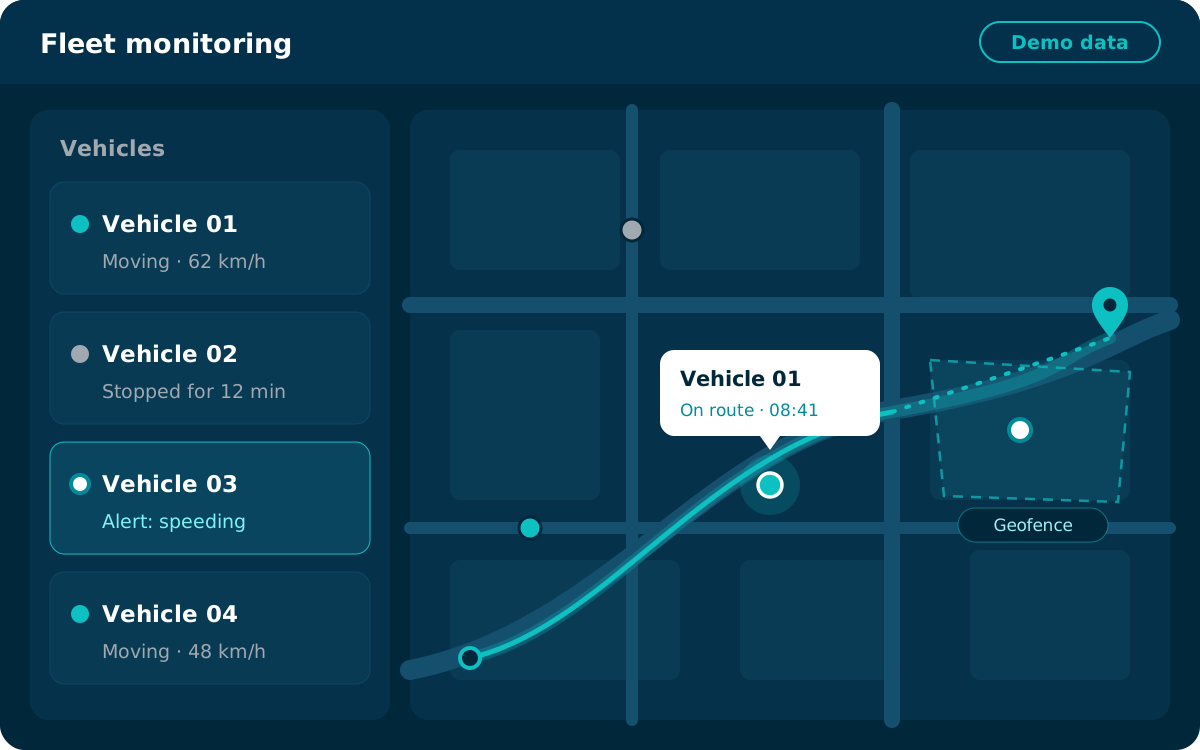
The interface shown is illustrative and does not display real data.
Practical Value for Cold Chain Operations
Benefits that depend on the installation, settings and follow-up, without guaranteeing cargo integrity.
Clearer visibility in transit
Clearer visibility of available temperature readings during trips.
Faster follow-up on deviations
A better chance to act on deviations when alerts arrive.
Organized records
More organized reading records for internal review.
Oversight of several vehicles
Clearer oversight of the refrigerated fleet.
Better customer communication
Information that helps answer customer questions about transport conditions.
Settings per cargo
Limits and alerts suited to each cargo type.
Why Choose Afaq Smart Tracking?
An approach that starts with your cargo and compartments.
Understanding requirements
Understanding your cargo types and required temperature ranges.
Suitable sensors
Help selecting compatible sensors and devices.
Threshold setup
Configuring supported limits and alerts.
Installation
Support with installation and platform setup within the agreed scope.
Technical support
Support within the agreed scope of service.
Frequently Asked Questions
Short answers about cold chain monitoring.
Can shipment temperature be monitored in transit?
Yes, using temperature sensors compatible with the tracker and configured on the platform. The readings available depend on the sensor, installation and connectivity.
Can I receive an alert when temperature limits are exceeded?
Yes, when the platform supports threshold alerts and the required limits are configured. Alert timing depends on reporting frequency, connectivity and settings.
Does the system control the refrigeration unit?
No. Monitoring sensors measure and report temperature; they do not control the refrigeration unit or automatically preserve cargo quality.
Can more than one compartment be monitored?
Yes, when the tracker supports multiple sensors; the number of sensors and mounting are defined after reviewing the vehicle.
Can compartment door openings be detected?
Yes, when a compatible door sensor is installed or a supported vehicle signal is available.
Do the records prove regulatory compliance?
On their own, the records are not a compliance certificate; they support internal procedures, and compliance depends on your procedures and the requirements that apply to you.
Does monitoring work with unpowered trailers?
Battery-powered devices may suit them, taking battery life, reporting frequency and the required sensor support into account.
Start Monitoring Your Temperature-Sensitive Shipments
Tell us about your cargo, vehicles and required temperature ranges so we can identify suitable sensors, devices and alerts.